If someone in your family smokes ganja every day and can’t seem to stop, you’ve probably already searched for Marijuana Treatment Plans in Patna. It’s a worry many families carry quietly. Some people just need a good counselor. Others need a proper rehab setup with trained people around them all day. Knowing the difference saves time, money and a lot of stress.
In this guide, we’ll walk through four treatment approaches in plain language. We’ll also look at what to ask before you pick a centre. If you’re comparing marijuana addiction treatment in Patna for yourself or a relative, this should make the choice a little easier.
What Are the Types of Marijuana Treatment Plans in Patna?
Marijuana, which many people call cannabis or ganja, affects memory, focus, mood and drive. Most people don’t think of it as a risky habit. Still, regular use can slide into cannabis use disorder. You’ll often see it when someone keeps using it even after trouble at work, college or home.
Good Marijuana Treatment Plans in Patna don’t start with a ready made package. They start with a conversation. The team asks how often the person uses, how they feel when they stop, what family life looks like and whether they’ve tried quitting before. Only then do they suggest a plan.
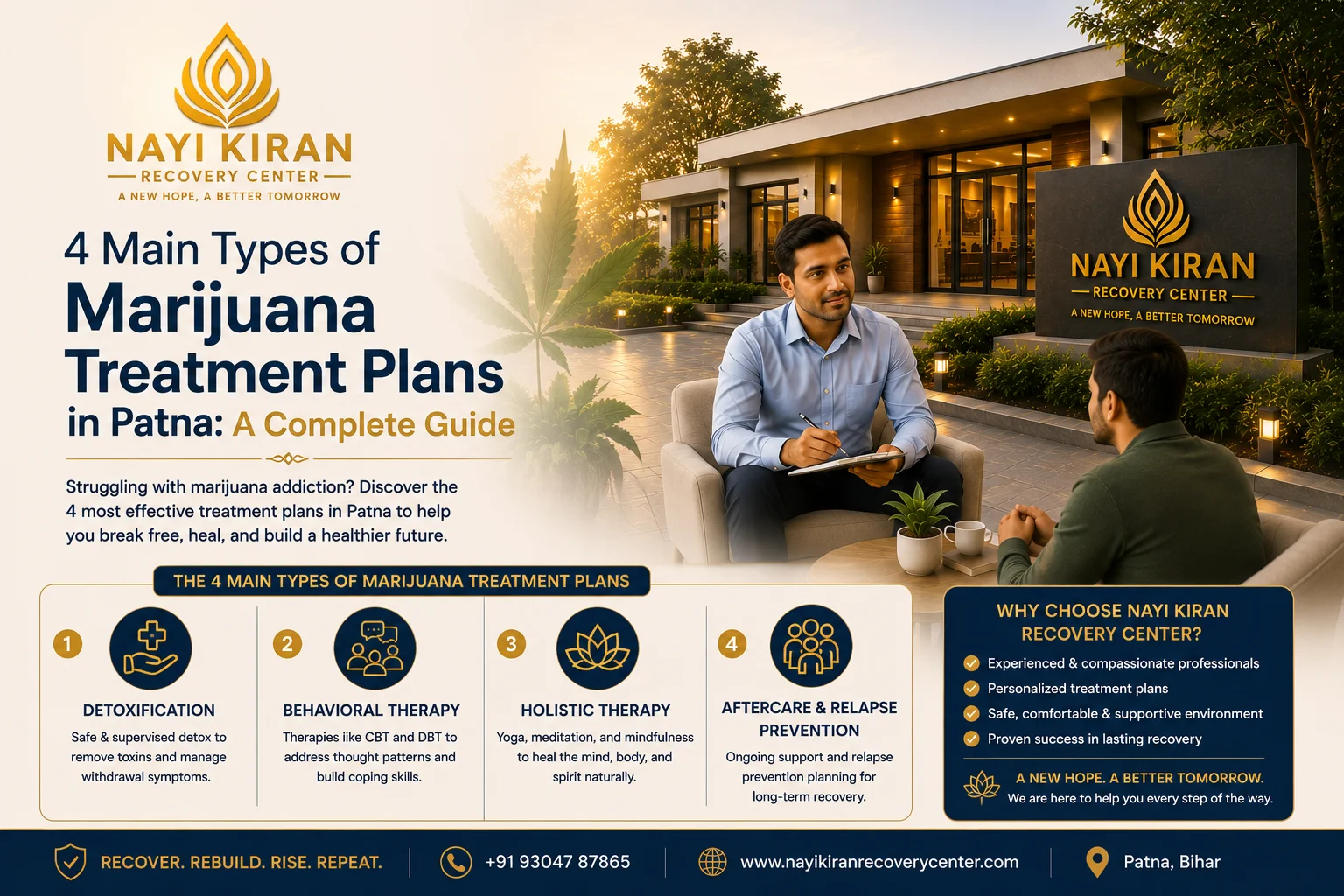
Most plans mix one or more of these four approaches:
- Counselling and behavioural therapy
- Structured rehabilitation and residential treatment
- Family-based therapy and support
- Aftercare and relapse prevention
1. Counselling and Behavioural Therapy for Marijuana Addiction
Talking helps more than most people expect. In marijuana de-addiction treatment, counseling is usually where things begin. A counsellor helps the person work out why they reach for cannabis in the first place. Then they build better ways to cope with stress, cravings and low moods.
Cognitive Behavioural Therapy (CBT)
CBT is all about spotting patterns. Maybe you smoke when you’re anxious, bored or sitting with certain friends. Once you see the pattern, you can plan a different move. A therapist helps you practise that move until it feels natural.
Motivational Enhancement Therapy (MET)
A lot of people say, ‘I know it’s hurting me, but I’m not sure I want to quit.’ That feeling is normal. MET works with it instead of arguing against it. The therapist asks questions that help you find your own reasons to change. Because those reasons come from you, they tend to last.
Individual Counselling
Private sessions give you room to speak openly. You can talk about shame, stress, money or relationships without anyone listening in. Sometimes anxiety or low mood is hiding behind the habit, and these sessions help bring it out.
Who may benefit? People who want to understand their own habits, handle cravings and rebuild confidence.
2. Structured Rehabilitation and Residential Treatment
Sometimes cannabis use gets out of hand. Jobs slip, exams get missed and arguments pile up at home. When that happens, a structured stay at a rehabilitation centre in Patna can give the person a calm, planned place to focus on getting better.
Daily Routine and Recovery Activities
Days follow a simple pattern. There’s counselling, meals, rest, light activity and group talks. It sounds basic, but routine matters. It rebuilds discipline and keeps the person away from the people and places linked to cannabis.
Professional Monitoring and Support
The care team keeps an eye on how things are going. If the person seems low, restless or stuck, they adjust the plan. However, the level of supervision should match what the person really needs, nothing more and nothing less.
Peer Support and Group Sessions
Sitting with others who understand can feel like a relief. People swap stories, hold each other accountable and realise they aren’t alone. That sense of company often makes the hard days easier.
Who may benefit? People who need more structure, regular professional support or a break from everyday triggers.
3. Family-Based Therapy and Support
One person’s habit rarely stays one person’s problem. Families deal with arguments, money worries and long silences. Family-based therapy brings relatives into the process in a healthy way. It also respects the person’s privacy and dignity.
Improving Communication
Therapists teach families to talk without blame or threats. Instead of asking, ‘Why do you keep doing this?’, the talk shifts to, ‘How can we help?’. That small change opens the door to honest conversation.
Educating Family Members
Many relatives don’t know what cravings feel like or how marijuana withdrawal symptoms show up. Learning the basics helps. They stop reading every mood swing as bad character and start responding with patience.
Creating a Supportive Home Environment
At home, small things matter. Regular meals, fixed sleep times and a lift to appointments all help. Fair boundaries help too. At the same time, family members shouldn’t cover up for substance use or treat recovery as a willpower test.
Who may benefit? People whose home life and relationships are closely tied to their recovery.
4. Aftercare, Relapse Prevention and Continuing Support
Finishing a programme feels great, but it isn’t the finish line. Aftercare is what stops progress from slipping once the daily structure disappears.
Identifying Triggers and Warning Signs
Everyone has triggers. Stress, old friends, familiar spots, boredom and bad days are common ones. A relapse prevention plan helps the person notice early warning signs. Then they can decide what to do before things spiral.
Developing Healthy Habits
Sleep, exercise, proper meals, a hobby and good company all make a difference. They won’t replace professional care. Still, they give recovery a stronger base.
Follow-Up Counselling
Regular check-ins keep the conversation going. People can talk about cravings, mood shifts or a rough week. And if there’s a slip, the plan simply gets reviewed. A setback isn’t a reason to give up.
Who may benefit? People who’ve finished a first programme and want steady support to stay on track.
Comparison of Marijuana Treatment Plans in Patna
The table below shows what each approach is for. A professional assessment can tell you whether one option or a mix of several suits the person best.
| Treatment approach | Main purpose | Suitable support |
| Counselling and behavioural therapy | Understand triggers and change harmful patterns | Individual therapy and CBT |
| Residential rehabilitation | Provide a structured recovery environment | Routine, supervision and group activities |
| Family-based therapy | Improve communication and family involvement | Family counselling and education |
| Aftercare and relapse prevention | Maintain progress after initial treatment | Follow-up sessions and coping strategies |
How to Choose Marijuana Treatment Plans in Patna and the Right Centre
Choosing a marijuana addiction treatment centre in Patna isn’t something to rush. Be wary of anyone who promises a quick fix, because recovery doesn’t work that way. Ask what support is truly available.
Here’s a simple checklist to carry with you:
- Qualified professionals: Are trained doctors, mental health professionals and counsellors involved in assessment and treatment?
- Personalised plans: Does the programme look at the person’s history, symptoms, mental health and goals?
- Clear information: Can they explain the services, daily routine, costs, supervision and follow-up before admission?
- Family involvement: Is family counselling or education offered when it makes sense?
- Confidentiality and dignity: Will care be respectful, private and free from judgement?
- Continuing support: What happens after the first programme ends?
A trustworthy nasha mukti kendra in Patna will answer these questions openly. If a centre gets defensive when you ask, take that as a sign to look elsewhere.
How Nayi Kiran Recovery Center Supports the Recovery Journey
Reaching out for help takes courage. Nayi Kiran Recovery Center is one option families can look at while comparing nasha mukti kendra in Patna. Before you commit to anything, have an honest talk with the care team. Share the cannabis use, emotional health, any past treatment and what you need from the programme.
Suitable Marijuana Treatment Plans in Patna should look at why the person started using. They should also teach healthier coping skills and prepare for the long run. So ask about assessments, counselling, medical referrals where needed and support after discharge.
When Should Someone Seek Professional Help?
Here are a few signs it’s time to reach out. The person keeps trying to stop but can’t. Cravings feel strong. Responsibilities get ignored. Use continues even though family life is suffering.
Some people feel irritable, restless or anxious after they stop. Poor sleep and low appetite are common too. These symptoms can be unpleasant, so it’s best to have a healthcare professional assess them.
If someone shows severe confusion, hallucinations, thoughts of self-harm or a risk of harm, get urgent medical help straight away. Don’t wait for a routine appointment.
For some background reading, the National Institute on Drug Abuse page on cannabis explains how the drug affects health.
Conclusion: Choosing the Right Marijuana Treatment Plans in Patna
There are four main routes: counselling and behavioural therapy, structured rehab, family-based therapy, and aftercare with relapse prevention. Each one covers a different part of recovery. Plenty of people end up using a mix.
When you understand Marijuana Treatment Plans in Patna, you can ask sharper questions and pick support that fits your situation. With professional guidance, steady effort and people who care, healthier habits are well within reach.
Frequently Asked Questions (FAQs) on Marijuana Treatment Plans in Patna
1. What are the four main types of marijuana treatment plans?
Counselling, structured rehab, family therapy and aftercare are the four main approaches. Most Marijuana Treatment Plans in Patna blend two or more.
2. Can marijuana addiction be treated without residential rehabilitation?
Yes. Many people can recover with outpatient counseling alone. The right choice depends on how heavy the use is and a professional assessment.
3. How long does marijuana addiction treatment take?
There’s no fixed timeline. It depends on how long cannabis was used, withdrawal, mental health and response to care.
4. What are the common symptoms of marijuana withdrawal?
Common ones include irritability, anxiety, restlessness, poor sleep, low appetite and cravings. A professional can help you manage them.
5. Is counselling effective for marijuana addiction?
Yes, it can help. Counselling teaches you to spot triggers and build healthier habits. CBT and MET are often part of a personalised plan.